Board of Directors
The interim board officers and directors are as follows:
President: Kurtis Elting
Vice-President: Sacha Lemke
Secretary: Susie Elting
Treasurer: Cheryl Marsh
Directors are Jen Brueggemann, Gail Gilliam, Vicky Taylor, Jackie Williamson, and Jerry Williamson.
Curator: Jackie Williamson
This board will hold its positions until the next annual meeting, to be in April or May 2027.
How the Thayer County Museum Found Its Home
The Thayer County Historical Society began with an ambitious vision. Robert Frank of Carleton organized a countywide steering committee with the goal of creating a modern museum dedicated to preserving Thayer County history. Early plans called for a new building and a paid curator, but county officials were unwilling to support a mill levy unless the group could demonstrate interest from more than 500 people.
The society therefore began on a smaller scale. When School District 25, known as the Marsh District, closed during school consolidation, it offered its country school building to the Historical Society. The organization finally had a home, and members met there, shared potluck dinners, explored historic sites, and collected local stories.
A much larger opportunity arose when the former Belvidere school became available. The town offered the society use of the brick school building through a rent-free 99-year lease. The building provided ample space, but it was in poor condition. Windows were broken, doors were boarded shut, and the upper floor contained dead birds and years of neglect. The society had almost no money, and financial support promised by local organizations failed to materialize.
At a discouraged meeting, members considered abandoning the project. They estimated that it would take at least $1,000 just to make the building presentable. The glass entrance doors they wanted would cost approximately $1,200. With little money and no definite curator, several board members planned to vote against accepting the building.
Before the vote could take place, Bill Reinke of Byron decided to act. Early one morning, Jackie Williamson discovered him removing the boards from the east entrance and installing glass doors. Reinke had obtained the doors at wholesale cost from Mr. Mannschrek of the Hubbell Lumber Yards and intended to complete the work before anyone could change their mind. Stub Williamson joined him, and the two men installed the doors before daybreak.
The unexpected appearance of those doors changed everything. Jan Carr, who lived nearby, volunteered to serve as curator. Donations began arriving from individuals, banks, churches, community groups, and the Thayer County Centennial Fund. George Apking provided a $500 interest-free loan, every bank in the county contributed, and the Belvidere village board confirmed the 99-year rent-free lease.
Community volunteers cleaned, painted, repaired, cataloged, and promoted the museum. A simple donation jar near the entrance, known as the “pickle jar,” sometimes collected as much as $80 on a Sunday. Weekly newspaper coverage encouraged more people to donate artifacts, and the collection soon expanded into the upper floors.
Over the following decades, the museum continued to grow. A genealogy department was established, an agricultural hall was added, and the Union Pacific donated a caboose and helped install a section of track. Nearly 5,000 donations of artifacts had been received by the time the original history was written.
What began as an uncertain effort by a small group of volunteers became a countywide institution. Its survival was made possible by persistence, community support, and the event remembered as the “Miracle of the Glass Doors.”
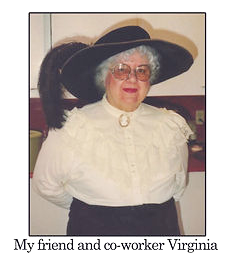
We are paying special homage in this Belvidere Breeze to Virginia Priefert, long-time Thayer County historian, long-time curator of the Thayer County Museum, and my long-time friend and co-worker who passed away on October 22, 2012. She and I worked side by side at the museum for a long time as co-curators. We both loved all aspects of Thayer County history and took seriously our job as curators to preserve it for future generations.
The following article appeared in The Hastings Tribune on the day of Virginia’s Celebration of Life Service, which was held at the Belvidere United Church of Christ. I was very glad to be interviewed by Andy Raun for this story.
Many years ago Virginia wrote a great story about how the museum got its start and had presented it to some groups. She was presenting the program to the Thayer County Historical Society’s annual meeting one night, but the firemen came and told everyone there might be a tornado, so we never heard the complete story. So, in honor of Virginia, I decided we needed to publish the story so that everyone can know “how the Thayer County Museum came to be located in Belvidere.”
- Jackie Williamson
The Beginning of the Historical Society and Museum in Belvidere
The Thayer County Historical Society was started by Robert Frank of Carleton. Bob got up a steering committee composed of people from the communities around the county. My husband’s brother suggested that Stub be on this committee as a representative of the Belvidere area. They mostly met monthly in the old gymnasium in Hebron where Parkside is now. Emaline Hole was the only woman who attended these meetings.
It seemed to me it was a social gathering, as every night when Stub returned I’d ask what they got accomplished and it was mostly visiting. Bob wanted to start a Historical Society which would build and make a museum that would be a modern fine building with a paid curator.
Towards the end of the first year, they had come up with a constitution and a very elaborate plan for a modern county museum building. Mr. Frank took this plan to the Thayer County Commissioners and asked to go on the ballot to ask for a mill levy to build such a structure. He was totally turned down, being told there was no interest in history or a museum in Thayer County, and only if they could prove interest of more than 500 people would they consider such a thing.
It was decided that in order to get the interest of 500 people, they should lower their standards and start a museum in some vacant building. Bob Thomas wanted to get the building where the VFW now is located. He asked the building owner if the Historical Society could use that vacant building, and he said he would be willing to run it. He’d put a sign on the door to come see him, and he would open it when people came. This was met with some agreement until the owner of the building said he would not donate the use of the building. He said he didn’t want hordes of people wearing out his floor.
Mr. Leonard Germer said that the Stoddard Church was being closed and they would donate it, and he suggested it be moved to the triangle south of the golf course between Highway 81 and 136. He thought the members of the church would be willing to work to get it moved. Bob Frank wanted to get into a brick building and didn’t want an old church. With hindsight, that would have been an ideal place for the museum from the tourist standpoint, being at the highway crossroads, but it just wasn’t meant to be.
Mr. Frank and his group continued to work on getting a museum, and after three years Bob became discouraged, and his large steering committee had dwindled down to just a very few. Of the original committee, there were a few who still persisted. When the Nebraska Centennial in 1967 came up, these few thought they should remain and do something. Harry Bryan and Robert Thomas were very hopeful something could be done to promote history.
Bob Thomas had been gleaning the Hebron papers which had been salvaged after the Hebron tornado in 1953, which were stored in back of Thomas Jewelry Store. Bob wrote articles for the Hebron Journal called “Out of the Past.”
Bob Frank became discouraged, and in a last attempt a meeting was called in the Legion Club and it was open to the public. Stub asked me to come to this meeting as a favor to him and I agreed. All the wives of the faithful members came. There was a very good turnout for that meeting. Bob Frank wanted someone to take over as president of the Historical Society. It was asked if anyone would be willing to head this Historical Society. People were in favor of having a society, but no one wanted to do the work.
Finally, Bill Apking of Alexandria stood up and nominated Stub to be president and me as secretary. I was floored. This was the first meeting I had attended and I couldn’t see either of us doing this, but the vote was seconded and we were railroaded into promoting a Historical Society.
This was the time of redistricting, and School District 25, known as the Marsh District, offered their modern country school to the Historical Society, so we now had a home. The group met regularly in this school, and many fun potluck dinners were held there. We went on many excursions around the county looking at historical places, such as Thompson Station.
Our officers were Stub and I, with Harry Bryan as the treasurer. Bob and Lucile Thomas, Amanda and Bill Reinke of Byron, and Paul and Alberta Bruning were directors. Herbert and Dora Marsh were part of the group, and the Thurland Edwards of Hubbell came occasionally, as did Bob Frank and his wife.
The Belvidere schoolhouse would be vacated as school consolidation was taking place. Bob Frank insisted we should have a brick building, and I thought this should please him. Jim Hudson was the mayor of Belvidere, and I called his wife and asked if they would consider letting the building be used as a museum.
Town board members Vi Bruning and Kent Williamson invited the group to look at the building. To entice the Historical Society to use the building, it was offered for a 99-year lease free of charge.
It was a very good offer. We looked at the building and everyone seemed impressed. It was large. It was brick. It could be converted into a museum very well, especially using the bookcases that were there. Everyone was impressed except for Bob Frank, who said he never envisioned his museum to be in Belvidere and he was not in favor.
The Historical Society didn’t have a hundred dollars in its treasury. The president of the Belvidere Woman’s Club had offers to do a lot of fundraisers available, such as farm sales, and said that if I would serve as financial chairman, they would donate half of the money that the Woman’s Club made towards fixing up the Belvidere school.
I threw myself into this project, and we cleared over $500. I was elated at such a sum of money that the Historical Society now would have.
Mr. Reinke said the Byron Lions Club would match this donation. But many of the people in Belvidere did not favor turning their wonderful building into a museum. It was too good a building for that, they said. It should be a nursing home, but they were told that it would require too much money to do that.
In September, the offer had been made by the town board and the Historical Society would have to make a decision. But where would we get any money to fix up the building? I told them of getting half of the Woman’s Club profits. Mr. Reinke said the Lions Club would help.
I went to the Woman’s Club meeting and some of the people who were very embittered by the school redistricting talked angrily against giving the money to the society as had been promised. It was brought to a vote, and they voted not to support the Historical Society. I felt betrayed.
I reported this to Bill Reinke. He said he got the same treatment. The Byron Lions Club said their money must stay in Byron. We still had no money.
The members of the Historical Society had to make a decision to go ahead with the project or not. We met at the schoolhouse again, but now everything was negative. The members looked at the broken windows on the top floor. There were two bushels of dead sparrows on the top floor. The doors on the east had been broken, and the east doorway was boarded up.
The men of the group decided that it would take $1,000 to make this building presentable. Where could we ever get $1,000? Harry Bryan was the very conservative treasurer. The first thing we would have to do was get a new door for the east entrance.
Some thought we could get new wooden doors for about $125. Harry said if we sold memberships at a dollar apiece, we could never get 125 people to give a dollar.
Stub conducted the meeting. Glass doors were just very new at that time. He said we don’t want old wooden doors. We should get glass doors that would modernize the building and let light come in. Mr. Bill Reinke agreed.
How much would that cost?
It was suggested that they could be $1,200. Harry just threw up his hands.
“We can’t be such dreamers and so unrealistic.”
We sat on the east steps of the building, and all the work that would have to be done was discussed. All the problems, like who would run it. We could never get enough artifacts to fill even one room, and so on.
Stub called for a motion to vote to approve or reject the offer of the use of the building put out by Belvidere’s town board.
Mr. Bill Reinke and Amanda sat on the top back steps, and he hadn’t said a word through the whole meeting. He just listened. He then stood when the call for a vote was made and said, “Let’s NOT make this decision tonight. Let’s all go home and sleep on it, and meet here tomorrow night and vote then.”
Everyone agreed to do that.
We got home and the phone rang. It was Harry Bryan. He said there was no way they could ever get the $125 for new wooden doors or the other money it would take to do this, and he was definitely going to vote NO tomorrow.
The phone rang again. This time it was our most enthusiastic historian, Bob Thomas. As much as he wanted to have a museum, and his wife wanted a place to keep all the Hebron Journals rather than their store, he could see there was too much work involved to do this, and he regretfully would vote NO the next night.
I couldn’t believe the phone rang again. This time it was Paul Bruning. He asked how I thought the vote would go, and I told him Harry was going to vote no because of lack of money. Bob was going to vote no because of the amount of work involved.
Paul said he was not afraid of work and he was sure the money would come, but we didn’t have any support from any of the town’s people. We would have to have someone who lived in town agree to help us and open the building when people wanted to bring things to us. Unless we had such a person, he would vote NO.
I reported this to Stub, and he said that he had thought it over and he had too much work to do. Unless I would agree to take over and get it started, he would vote no also, and he was washing his hands of the project.
I thought that settled it. The majority of the board was voting no. I sure wasn’t going to take over that job. This wasn’t my idea. I would have to vote no also. Making the schoolhouse into a county museum was definitely doomed.
Then miracles began to happen.
I woke up very early in the morning and had sort of a restless feeling. I thought, “It could have been. I suppose the building will just have to be torn down now.”
I thought I’d go down and watch the sunrise from the east steps and say farewell to a project that might have been.
Why I got such a crazy idea, I had no idea. I wrote a note to Stub saying I was going to watch the sunrise from the school steps and drove off into the darkness.
I came to turn the corner by the standpipe. I couldn’t believe my eyes. There was a pickup with the headlights shining on the east door. There was a man tearing off the boards that boarded the east door. Someone was breaking into the building.
What should I do? Why would anyone want in there? Should I go get some help? We didn’t have cell phones back then.
I turned off my car lights and watched. Who was this lone man working on the east door? I couldn’t stand it. I got out and walked over. There was Bill Reinke of Byron.
“What are you doing?” I asked.
He told me he was installing glass doors in the east side of the building.
“Don’t ask questions. Go get your husband and get him in here to help me. This is a bigger job than I thought it would be.”
I rushed home and got Stub out of bed. He couldn’t believe such a thing either. The two men worked to get the doors installed before daybreak. Mr. Reinke explained that he built houses. He had seen this all too often.
People would plan to build a house. They would go over their plans, get the lot ready, and then the time to sign the contract would come. They would start worrying if this was the right thing to do, and they would usually back out.
So Mr. Reinke devised a Plan B. He would tell them not to decide tonight, but wait a week, and that he’d come back then and they could decide. He would then put his men to work that night.
Sometimes, if it were in the country, he could get a week’s work done and the rafters up before the new house was discovered. The owner would come and be furious.
“I didn’t tell you to go ahead with this house. We were going to decide later.”
Bill would say he was so sorry, he misunderstood.
“Where were you when we dug the basement?”
The man would be angry for a few days, and then would come the problem of what would we do about it. Bill would say all right, it was his mistake. He would have to go in and undo the work and fill the basement back in.
The man would inevitably say, “Oh, that’s a shame to undo all your work. Since you have done this much already, just go ahead and finish it.”
He said he could see this happening with the Historical Society, and he decided he would install glass doors that night. He called up Mr. Mannschrek of the Hubbell Lumber Yards and asked if he had any glass doors.
Now the miracles had started happening. Mr. Mannschrek had just gotten in a pair of doors that would be just right for the east doors. He would sell them wholesale to get the museum started.
Bill and Amanda went after the meeting and got them loaded in his pickup. He was going to get them installed early in the morning before anyone was up.
While they were finishing up, Jan Carr, who was staying at her parents’ house located two doors west of the school while Dick was in Vietnam (it was actually Korea), got up to let her dog out and saw the activity at the schoolhouse. She came over in her housecoat.
She said if you are really going to get this done, she would volunteer to be full-time curator. That would be so great, as she lived so close to the building. That is all Paul Bruning wanted. His vote would now turn to yes.
As the town woke up, Mr. Reinke said, “Now you folks don’t know anything about how these doors got here.”
Sure enough, they weren’t there in the evening, and there they were by morning all installed. How could this be? It was an anonymous, omnipotent, unknown benefactor. It was a miracle, glass doors suddenly appeared.
I asked Mr. Reinke who was paying for the doors.
“Who is actually paying for the new glass doors?”
He said, “We actually don’t know. I charged them. It would be 30 days before we have to put up any money. By then the money will come in.”
Sure enough, it did.
We could truthfully say we don’t know who bought the doors, as they weren’t paid for by one person. The members of the Historical Society came, and each was so surprised. The town people were surprised. After all, we had not made any agreement with them to use the building.
I especially remember that Harry Bryan was the last to get to the meeting. We all sat down on the east steps. None of us could believe these $1,200 doors had miraculously appeared. Half of that money was labor, and Mr. Reinke and Stub donated that.
Stub went into Alexandria and told the Apkings what had happened. George gave him an interest-free loan of $500. There was a county bank meeting, and Bill Apking told of the miracle of the glass doors at the meeting.
Mr. Van Cleef of the Carleton bank gave $25, and every bank in the county followed suit and gave $25. This just floored Harry Bryan, who said no one would ever donate more than a dollar.
One individual gave $50, but by the end of the month the same guy donated $100 more. One person said he owed money to someone in Belvidere, and so he donated the odd amount of $158.42, which would clear his conscience.
I used to tell the Rotary clubs that we would gladly take conscience money.
The Sacred Heart Church in Hebron gave $50, which impressed me, as my church at that time only donated to faraway missions, not the local need.
The Thayer County Centennial Fund donated what was left in its treasury of $520. The Belvidere village board was so impressed they said they would let us have the building rent-free for 99 years and keep the grass mowed.
In appreciation, Vi said they would furnish the electricity, heat, and water for a year. Wow.
The Thayer County Historical Society Museum in Belvidere was on its way. Every town and organization seemed to enthusiastically endorse it. Organizations came and painted and did other work.
A jar which had contained dried milk was placed by the door, and Jan Carr named it the “pickle jar.” There would be up to $80 on a Sunday in small donations.
Jan served as curator until her husband came home, and then her sister, Jackie, took over and did the most good for the museum by writing an article for the Hebron Journal every week and mentioning all the artifacts donated.
Tom Long, the Hebron Journal-Register editor, gave us front-page coverage, and this made the museum grow until we had to clean up the upstairs to have enough space.
Many things have happened and have been added through the last 30 years, such as Jackie’s genealogy department, which brings the most number of people to the museum today.
When Bob Thomas was president, Jan Kenner came up with the idea of starting the Arts and Crafts Country Market Fair, which has been so successful.
The County Commissioners have given a small mill levy and paid for the new Ag Hall. The UP donated a caboose and, thanks to a graduate of Belvidere, Bill Jackson, the UP brought a large crew with seven pieces of machinery from Wichita and laid a track to set it on.
Nearly 5,000 donations of artifacts have been made to the museum.
It could take a book to tell what has transpired, but this was only to be the beginning of the Thayer County Museum. When Vi became a Green Thumb worker, she got the Belvidere Woman’s Club and all the county women’s clubs to be our supporters.
It would be impossible to name everything that has transpired, but it would never have happened without the Miracle of the Glass Doors!
Note: This is a small article taken from the Belvidere Breeze 2012-2013 publication, sponsored by the Belvidere High School Alumni Committee.